Email:export@gzliyin.com
WhatsApp:+8613902386325
Email:export@gzliyin.com
WhatsApp:+8613902386325
Lavfrekvent støj er et af de mest udfordrende akustiske problemer i både boliger og erhvervslokaler. Uanset om det kommer fra trafik, hjemmebiografens subwoofere, HVAC-systemer eller tilstødende lejligheder, lavfrekvent lyd har en tendens til at bevæge sig længere og lettere trænge igennem vægge end højere frekvenser.
Mange spørger: Virker akustiske paneler til lavfrekvent støj? Svaret afhænger af typen af akustikpanel, dets tykkelse og hvordan det er installeret. I denne artikel vil vi undersøge, hvordan akustikpaneler interagerer med lavfrekvent lyd, og hvordan du kan forbedre den akustiske ydeevne i dit rum.
Lavfrekvent støj refererer typisk til lyde i Område fra 20 Hz til 250 HzDisse lyde omfatter:
Bas fra musik- eller hjemmebiografsystemer
Tunge fodtrin eller strukturelle vibrationer
Trafikrumlen eller byggestøj
Mekanisk udstyr eller HVAC-systemer
I modsætning til højerefrekvente lyde, såsom tale eller klirrende genstande, har lavfrekvente bølger længere bølgelængderPå grund af dette kan de nemt trænge igennem vægge og reflekteres i store rum.
Dette gør dem betydeligt sværere at absorbere ved brug af standard akustiske behandlinger.
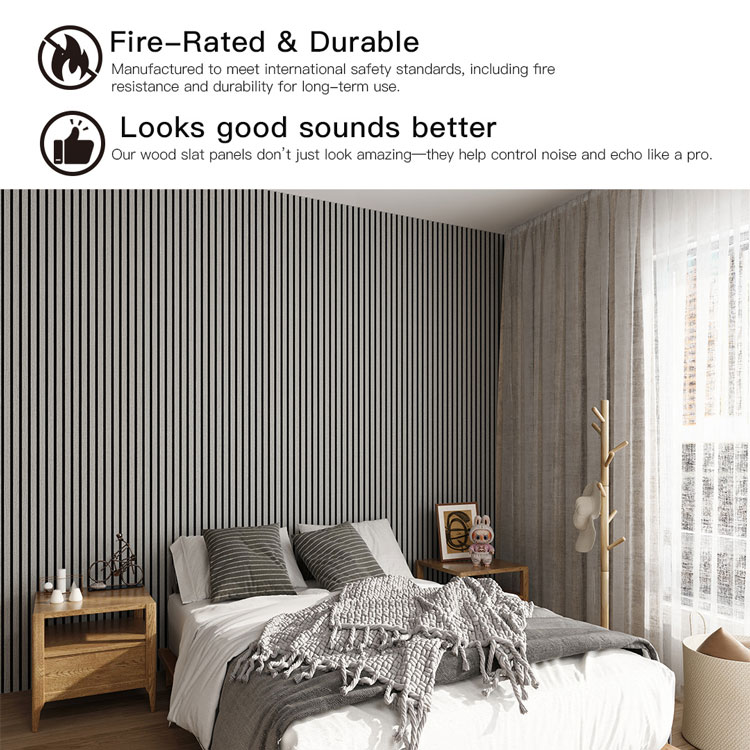
Akustiske paneler er designet til at absorbere lydenergi og reducere refleksioner i et rumDe fleste paneler bruger materialer som:
Polyesterfiber
Mineraluld
Akustisk skum
Filtbaserede lydabsorberende kerner
Når lydbølger rammer panelets overflade, omdanner det porøse materiale lydenergi til små mængder varme, hvilket reducerer ekko og efterklang.
Imidlertid, Standard akustiske paneler er mest effektive til absorption af mellem- og højfrekvente lyde, som omfatter tale, kontorstøj og hverdagslyde i hjemmet.
Det korte svar er: Standard akustiske paneler hjælper kun delvist med lavfrekvent støj.
Fordi lavfrekvente bølger er længere og kraftigere, kræver de tykkere og tættere akustiske materialer for at blive absorberet effektivt. Tynde dekorative paneler eller lette materialer reducerer muligvis ikke dybe baslyde betydeligt.
Akustikpaneler kan dog stadig bidrage til forbedret lydkontrol på flere måder.
Selv hvis de ikke absorberer dyb bas fuldt ud, reducerer akustiske paneler refleksioner og efterklang i rummet. Dette hjælper med at forhindre basopbygning og akustisk ubalance, hvilket forbedrer den samlede lytteoplevelse.
Ved at kontrollere refleksioner i mellem- og højfrekvente frekvenser skaber akustiske paneler stemmer og musik klarere, selv når der er lavfrekvente lyde til stede.
I mange tilfælde fungerer akustikpaneler bedst i kombination med andre akustiske løsninger, såsom:
Basfælder
Akustiske loftspaneler
Lydisoleringsmaterialer
Sammen skaber disse elementer et afbalanceret akustisk miljø.
Hvis lavfrekvent støj er din største bekymring, er der flere strategier, der kan forbedre ydeevnen.
Paneler med større tykkelse og tæthed kan absorbere lavere frekvenser mere effektivt. Tykkere paneler giver dybere lydabsorption og hjælper med at håndtere basrefleksioner.
Montering af akustikpaneler lidt væk fra væggen kan forbedre lavfrekvensabsorptionen. Luftspalten tillader lydbølger at trænge dybere ind i panelet, hvilket øger den akustiske effektivitet.
Basfælder er specielt designet til at absorbere lavfrekvent lyd. De placeres typisk i hjørner af et rum, hvor basenergi har tendens til at ophobe sig.
Jo mere akustisk behandling der er installeret i et rum, desto mere effektiv bliver den. Ved at dække flere overflader – vægge, lofter og hjørner – hjælper man med at kontrollere både høje og lave frekvenser.
Moderne akustiske paneler af trælameller tilbyder en kombination af lydabsorption og forbedring af indretningen. Disse paneler består typisk af:
Dekorative lameller i naturligt træ eller MDF
Lydabsorberende akustisk filtbagside
Præcisionskonstrueret afstand for forbedret akustisk ydeevne
Denne struktur gør det muligt for panelerne at reducerer ekko og efterklang, samtidig med at et sofistikeret arkitektonisk udseende bevares.
Selvom de primært er rettet mod mellem- og diskantlyd, kan trælameller, når de installeres korrekt og kombineres med andre akustiske behandlinger, bidrage til et mere afbalanceret akustisk miljø.
Akustiske paneler anvendes i vid udstrækning i rum, hvor lydkvalitet og komfort er vigtig, herunder:
Hjemmebiografer
Indspilningsstudier
Kontorer og mødelokaler
Restauranter og caféer
Hoteller og erhvervsindretning
Beboelsesrum
I disse miljøer forbedres kontrollen af refleksioner og efterklang betydeligt taleklarhed, lyttekomfort og generel akustisk kvalitet.
På Guangdong Leeyin Akustik, vi specialiserer os i design og fremstilling af trælamelvægpaneler og akustikpaneler for globale markeder.
Som en af de førende eksportører af akustiske paneler af trælameller i Kina leverer vi produkter af høj kvalitet, der bakkes op af stærke produktionskapaciteter.
Vores fordele omfatter:
20.000 kvadratmeter moderne produktionsfaciliteter
Avanceret produktionsudstyr og teknologi
Streng kvalitetsstyring i overensstemmelse med internationale standarder
Storskala produktionskapacitet til global distribution
Omfattende erfaring med levering af arkitektoniske og kommercielle projekter over hele verden
Vores akustikpaneler af trælameller er designet til at kombinere akustisk ydeevne, holdbarhed og moderne arkitektonisk æstetikhvilket gør dem ideelle for designere, entreprenører og distributører.
Så, Virker akustikpaneler til lavfrekvent støj?
Standard akustiske paneler er mest effektive til at reducere mellem- og højfrekvente refleksioner, men de kan stadig spille en vigtig rolle i styringen af den overordnede rumakustik. Når de kombineres med tykkere materialer, korrekte installationsteknikker og yderligere akustiske behandlinger såsom basfælder, kan de bidrage til bedre kontrol af lavfrekvent lyd.
Til projekter, der kræver begge dele lydkontrol og moderne indretning, akustikpaneler af trælameller tilbyder en fremragende løsning.
Hvis du leder efter akustiske paneler af høj kvalitet til bolig- eller erhvervsprojekterGuangdong Leeyin Acoustics tilbyder professionel produktion, pålidelig kvalitet og stærke globale leveringskapaciteter.

Tlf / Whatsapp : +86 13902386325 / +86 13902386325
E-mail :
export@gzliyin.com


© 2026 Guangdong Liyin Acoustics Technology Co., Ltd. Alle rettigheder forbeholdes.

Hi! Click one of our members below to chat on


